Wolf's Paw Apples
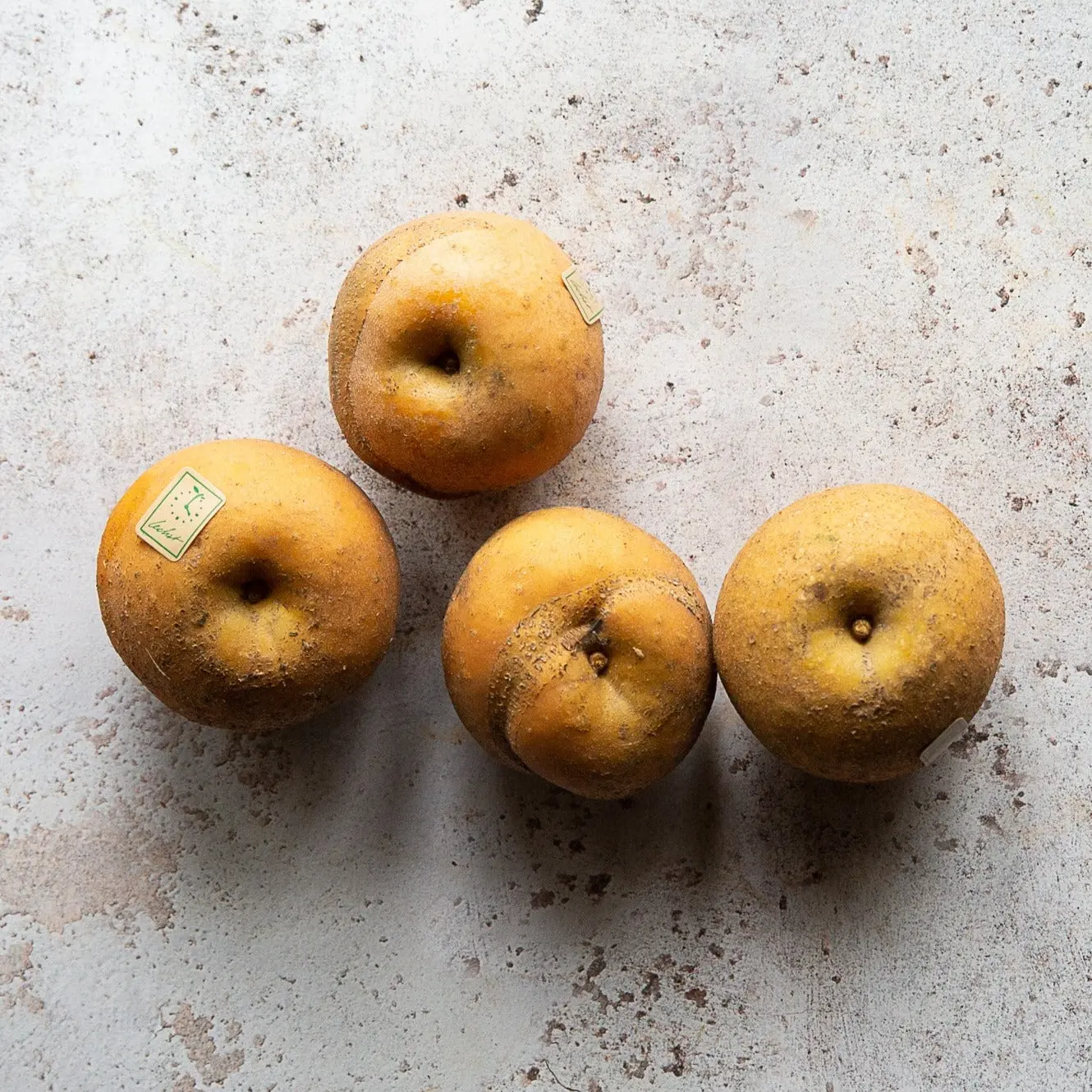
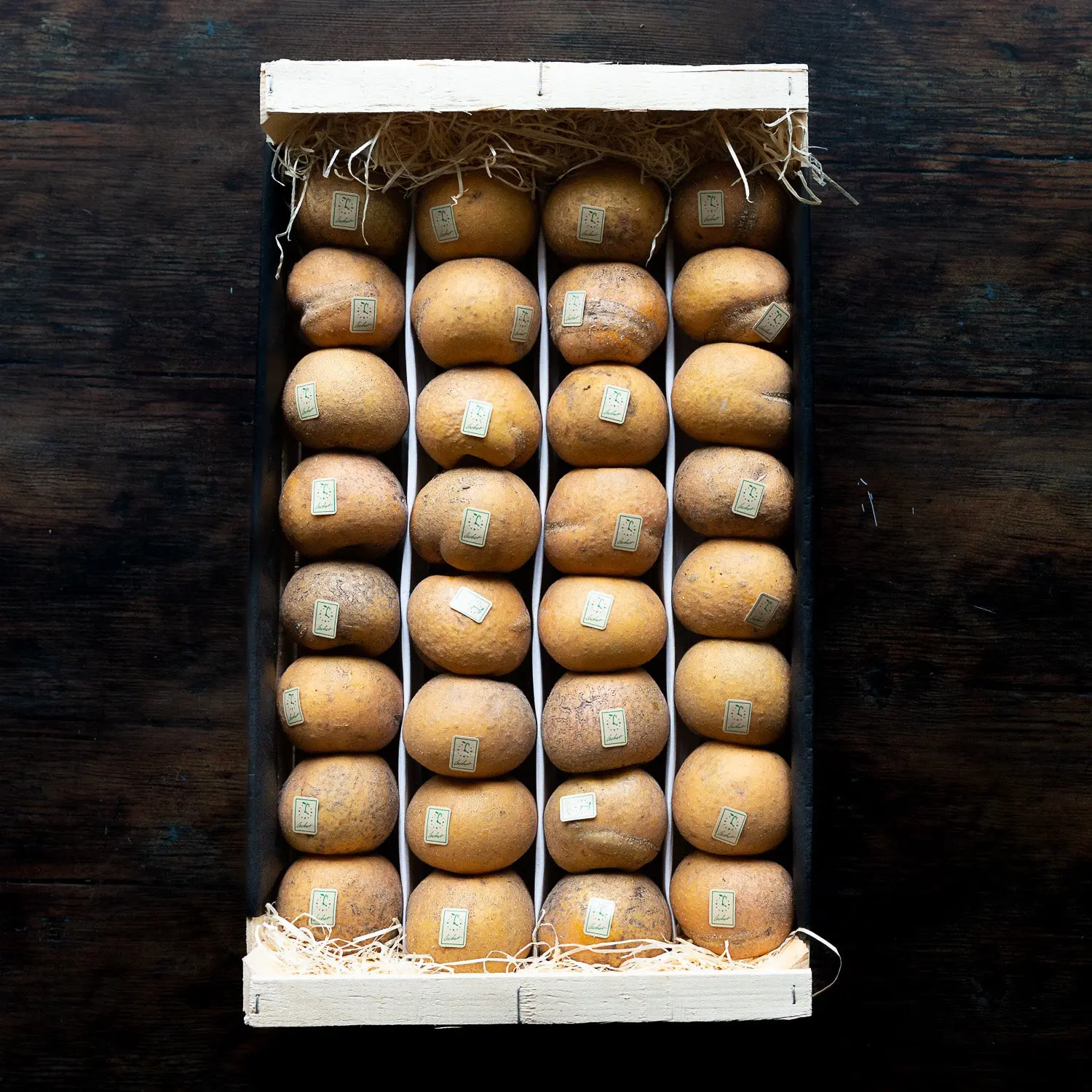
Patte de Loup (Malus domestica) — one of France's oldest surviving apple varieties, originating from Beaupréau in the Maine-et-Loire département and documented in horticultural texts since the 1670s, though likely cultivated since the Middle Ages. The name translates as "wolf's paw" — a reference to the distinctive elongated scar that typically runs across the face of each fruit, as though it has been clawed. These are not blemishes. They are the defining characteristic of the variety and the reason you will never find this apple in a supermarket.
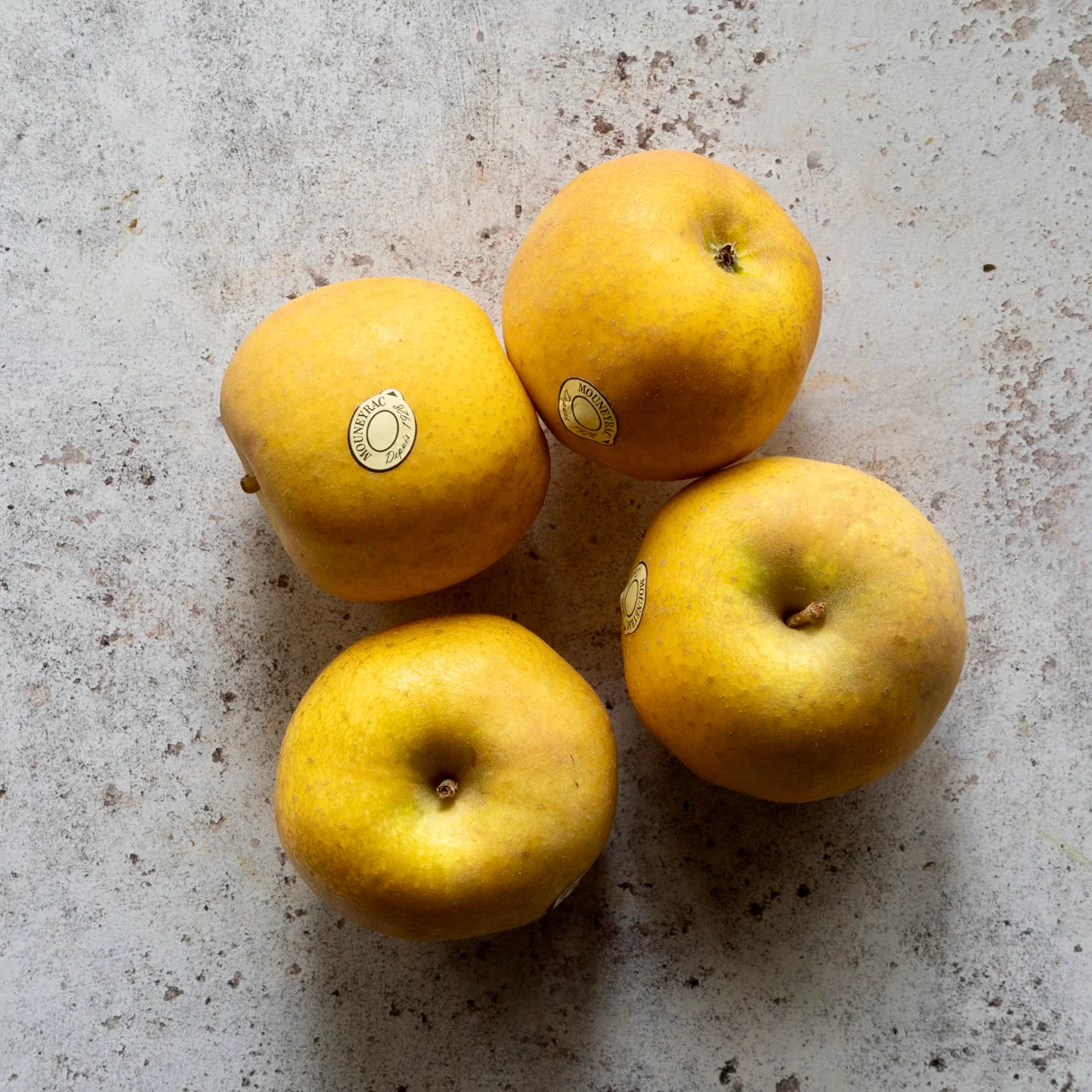
Patte de Loup apples are small, irregularly shaped and russeted, with rough, olive-bronze skin that looks nothing like a modern commercial apple. Beneath that skin, the pale yellow flesh is fine-grained, firm and crisp, with a sweet-tart flavour that develops genuine complexity in storage. Left for several weeks after harvest, the acidity softens and distinctive notes of aniseed and lychee emerge — unusual in an apple and entirely specific to this variety. Patte de Loup is recognised by the Slow Food Foundation's Ark of Taste as a heritage variety worth preserving. It is an excellent dual-purpose apple: eat fresh when the aniseed character has developed, or bake into tarts and cakes where the firm flesh holds its shape and the flavour intensifies with heat. A natural companion to cheese, charcuterie and boudin.
Origin: France (Maine-et-Loire / north-west France)
Ingredients: Patte de Loup apples (Malus domestica)
Storage: Store in a cool, dark place. Patte de Loup apples keep well for one to four months. Flavour develops and improves in storage — best eaten from January onwards.
Original: $8.12
-70%$8.12
$2.44Product Information
Product Information
Shipping & Returns
Shipping & Returns
Description
Patte de Loup (Malus domestica) — one of France's oldest surviving apple varieties, originating from Beaupréau in the Maine-et-Loire département and documented in horticultural texts since the 1670s, though likely cultivated since the Middle Ages. The name translates as "wolf's paw" — a reference to the distinctive elongated scar that typically runs across the face of each fruit, as though it has been clawed. These are not blemishes. They are the defining characteristic of the variety and the reason you will never find this apple in a supermarket.
Patte de Loup apples are small, irregularly shaped and russeted, with rough, olive-bronze skin that looks nothing like a modern commercial apple. Beneath that skin, the pale yellow flesh is fine-grained, firm and crisp, with a sweet-tart flavour that develops genuine complexity in storage. Left for several weeks after harvest, the acidity softens and distinctive notes of aniseed and lychee emerge — unusual in an apple and entirely specific to this variety. Patte de Loup is recognised by the Slow Food Foundation's Ark of Taste as a heritage variety worth preserving. It is an excellent dual-purpose apple: eat fresh when the aniseed character has developed, or bake into tarts and cakes where the firm flesh holds its shape and the flavour intensifies with heat. A natural companion to cheese, charcuterie and boudin.
Origin: France (Maine-et-Loire / north-west France)
Ingredients: Patte de Loup apples (Malus domestica)
Storage: Store in a cool, dark place. Patte de Loup apples keep well for one to four months. Flavour develops and improves in storage — best eaten from January onwards.